ISLAMABAD, Dec 03 (APP):Experts at the Islamabad Conclave Wednesday cautioned that transnational terrorism, ideological extremism and emerging non-traditional security threats were rapidly reshaping South Asia’s security landscape, urging regional states to move beyond political divides and adopt a coordinated, forward-looking approach. The second working session titled, ‘Transnational Terrorism and Emerging Security Challenges in South Asia’, was hosted by the Center for Afghanistan Middle East and Africa (CAMEA), said a press …
CAMEA session calls for regional cooperation, inclusive governance and counter-extremism frameworks
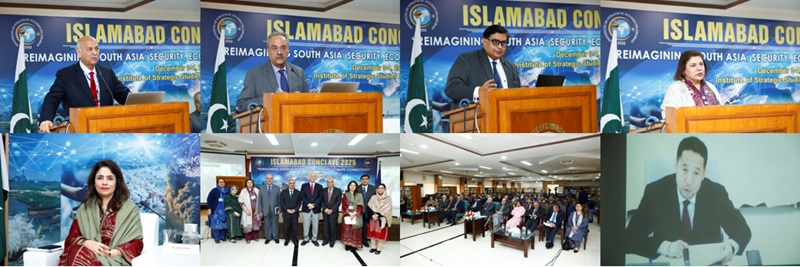
ISLAMABAD, Dec 03 (APP):Experts at the Islamabad Conclave Wednesday cautioned that transnational terrorism, ideological extremism and emerging non-traditional security threats were rapidly reshaping South Asia’s security landscape, urging regional states to move beyond political divides and adopt a coordinated, forward-looking approach.
The second working session titled, ‘Transnational Terrorism and Emerging Security Challenges in South Asia’, was hosted by the Center for Afghanistan Middle East and Africa (CAMEA), said a press release.
The keynote speaker of the session was Senator Mushahid Hussain, Former Chair of the Senate Defence Committee. Other speakers included Dr. Amina Khan, Director, CAMEA, Ambassador Asif Durrani, Pakistan’s former Special Representative on Afghanistan, Dr. Hu Shisheng, Deputy Secretary-General of the Academic Committee and Senior Research Fellow at the China Institutes of Contemporary International Relations (CICIR); Dr. Shahab Enam Khan, Professor in the Department of International Relations at Jahangirnagar University, Bangladesh, and Dr. Shabana Fayyaz, Professor, Department of Defence and Strategic Studies, Quaid-e-Azam University Islamabad.
Dr. Amina Khan noted that transnational networks have intensified terrorism in South Asia, with groups forging alliances and mirroring tactics. She warned that ethnic cleansing–like methods by self-proclaimed democracies without accountability embolden extremists. She stressed that states seeking international recognition must uphold international norms and counter terrorism obligations to safeguard legitimacy and regional security.
In his Keynote address, Senator Mushahid Hussain Sayed highlighted the shift from uni polarity to multipolarity and Asia’s growing influence. He pointed to popular movements in Bangladesh, Sri Lanka, and Nepal as expressions of South Asia’s resistance culture, while identifying India’s cross-border aggression and Akhand Bharat doctrine as major challenges. Calling for public empowerment, he stressed stronger regional cooperation on climate, population pressures, health, and education, and noted the value of China’s BRI and the SCO’s anti-terror framework. On Afghanistan, he urged diplomacy over force and envisioned a more stable and peaceful South Asia through dialogue and cooperation.
Ambassador Asif Durrani noted that terrorism is often defined selectively, with non-state actors posing persistent threats. Citing Pakistan’s long experience, including India’s branding of the Kashmiri freedom movement as terrorism in the 1980s, he said such narratives and historical baggage hinder regional progress. He stressed that effective counter terrorism demands regional cooperation, mutual understanding, and pragmatic policies.
Dr. Hu Shisheng noted that cross-border militancy has become a sophisticated regional challenge, particularly for Pakistan. Over 90 per cent of terrorist attacks in 2023 occurred in conflict zones, shaped by dynamics of strategic depth and plausible deniability. Militants exploit unresolved issues and hardline ecosystems, undermining security and development. He stressed that regional stability depends on cross-border cooperation, reducing grievances, and expanding economic opportunities.
Dr. Shahab Enam Khan noted that ideological extremism in South Asia is increasingly driven by non-state actors, the weaponisation of resources, and the manipulation of information through social and digital media. He emphasised that resilience depends on community-led initiatives, women’s empowerment, and institutions that prioritise dignity, opportunity, and inclusive governance. He stressed that only regional cooperation and collective action can prevent terrorism and extremism from gaining ground.
Dr. Shabana Fayyaz highlighted significant gaps in regional security cooperation, noting that today’s militants operate independently rather than as traditional proxies.She observed that groups such as Al Qaeda, ISKP, IMU, and African-based networks have further complicated South Asia’s terrorist landscape. Emphasizing the growing role of technology, she underscored the need for greater cyber literacy. Dr. Fayyaz called for preventive dialogue and a holistic regional framework to address these evolving threats.