Global fashion brands urged to protect workers from climate hazards
Global fashion brands urged to protect workers from climate hazards
By Andleeb Khan
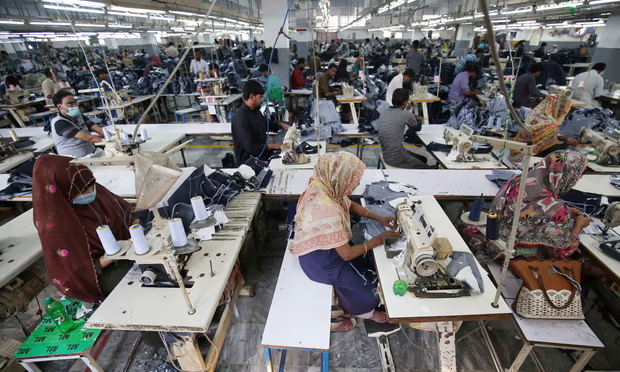
ISLAMABAD, Dec 3 (APP): Workers in international fashion and home goods supply chains in Pakistan, especially Karachi, are facing severe physical, mental, and financial hardship as rising temperatures worsen already unsafe working conditions. Consumers and multinational brands in high-income countries continue to benefit from production models that fail to address climate risks, Climate Rights International said in its report on Wednesday.
All of the companies cited are signatories to the International Accord for Worker Health and Safety in the Garment and Textile Industry, a legally binding agreement between garment brands and trade unions in Pakistan and Bangladesh, along with the Pakistan Safety Agreement, which is being renegotiated before it expires on December 31.
“The fashion industry’s role in driving both overconsumption and global emissions is well-documented,” said Cara Schulte, researcher at Climate Rights International and author of the report. “And now some of the biggest household names in fashion and home goods are fueling and then ignoring new dimensions of occupational risk brought on by climate change. These companies are effectively turning a blind eye as workers across their supply chains continue to suffer and collapse in the extreme heat.”
Temperatures in Karachi routinely rise above 38–40°C (100–104°F), with some areas of Sindh recording highs above 52°C (126°F). Climate scientists have warned that such extreme heat events are becoming more frequent, pushing millions of low-income workers into dangerous conditions. Inside garment factories and textile mills, with machinery generating extra heat and ventilation often lacking, the risks intensify.
Workers interviewed by Climate Rights International described nausea, dizziness, blurred vision, muscle tremors, and injuries linked to extreme temperatures. Many said they had fainted or had watched colleagues collapse. One worker, Muhammad Hunain, recalled working through outdoor temperatures as high as 45°C (113°F). “You can imagine how much hotter it becomes inside, where machinery, bodies, and fabric all trap heat,” he said.
Despite these risks, Climate Rights International found that factories, textile mills, and most sourcing brands provide little protection. As Hunain described it, “There are no fans, no cooling units, no ventilation … The workers are simply left to struggle.”
The findings come as negotiations continue on the International Accord’s Pakistan Country-Specific Safety Program. The need to recognise extreme heat as an occupational hazard has become urgent as Pakistan experiences some of the fastest-rising temperatures in South Asia. Historically, the Accord has not recognised extreme heat as a core workplace risk.
Climate Rights International said the hazards faced by Karachi’s workers reflect a broader trend in which global fashion and textile supply chains offload climate risks onto vulnerable workers. The findings build on the group’s earlier investigation in Dhaka, Bangladesh, as well as research from other garment hubs across South Asia, showing a pattern of workplace harm worsened by insufficient climate protections.
Muhammad Hunain said, “If the heat keeps rising every year, workers like us will suffer the most. We need fans, ventilation, fair wages, job security, and proper medical support. These are basic needs.”
Experts warn that without climate-responsive safety measures, millions of workers, not only in Karachi’s factories but nationwide, will face escalating health risks. Protecting them is both a labour-rights obligation and a public-interest imperative.
Talking to APP, Cara Schulte, researcher at Climate Rights International, said, “We have now spoken to workers in global fashion supply chains in both Bangladesh and Pakistan, and most alarming is what appears to be the industry’s tolerance for serious harm. Garment workers have expressed concern that extreme heat is making it harder for us to keep pace with intense production targets, earn wages, and … for many workers … the bottom line is that the heat is making it harder to survive.”
Workers told her that fainting was becoming routine on hot factory floors, and many said these incidents were treated casually by workplace authorities, if not ignored. “That can’t continue. Brands and suppliers have to work together to address heat stress as the very serious occupational hazard that it is … and immediately develop actionable and enforceable protections so that workers aren’t forced to risk their health just to put food on the table.”
Pakistan’s garment and textile industry is a major driver of the national economy, contributing around 8–9% of the country’s GDP and accounting for over 60% of its total exports. The sector provides employment to millions of workers, particularly women, and supports ancillary industries including logistics, packaging, and dyeing. Its growth is vital for foreign exchange earnings and economic stability, making the well-being and productivity of factory workers not only a labor rights issue but also a key factor in sustaining Pakistan’s overall economic health.