ISLAMABAD, Dec 02 (APP): A three-day global meeting opened in Islamabad on Monday, bringing together representatives from seven countries to discuss how social protection programmes can reduce malnutrition. Pakistan and Timor-Leste are co-hosting the event, with the World Food Programme (WFP) facilitating the discussions that focus on evidence, country experiences, and future action. A major global learning event on nutrition-sensitive social protection began in Islamabad, where government officials and experts …
Seven countries meet in Islamabad to shape global action on malnutrition, social protection
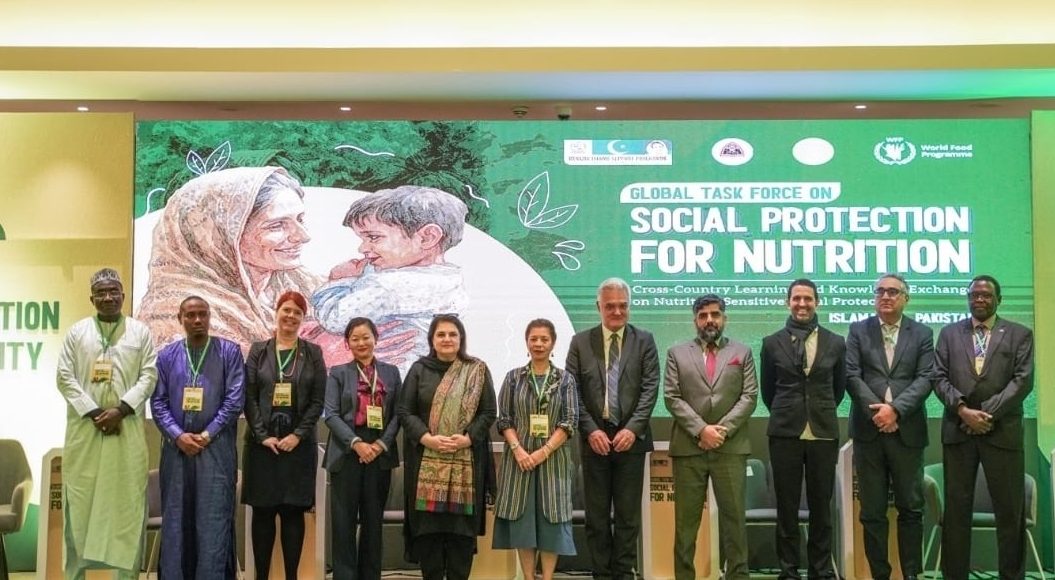
ISLAMABAD, Dec 02 (APP): A three-day global meeting opened in Islamabad on Monday, bringing together representatives from seven countries to discuss how social protection programmes can reduce malnutrition.
Pakistan and Timor-Leste are co-hosting the event, with the World Food Programme (WFP) facilitating the discussions that focus on evidence, country experiences, and future action.
A major global learning event on nutrition-sensitive social protection began in Islamabad, where government officials and experts from Bangladesh, Cambodia, Lao PDR, Nepal, Niger, Timor-Leste, and Pakistan gathered to share practical solutions for reducing malnutrition. The meeting is convened under the Global Task Force on Social Protection for Nutrition and aims to help countries integrate nutrition into national safety-net systems.
The discussions will review existing programmes, successful models, and new approaches that can strengthen national policies. Delegates will explore how to expand support for vulnerable families, improve nutrition in early childhood, and align social protection with global development goals.
As host country, Pakistan is presenting its experience through the Benazir Income Support Programme (BISP), which has become a leading model in the region. BISP’s initiatives, including its nutrition-focused Benazir Nashonuma Programme, are being highlighted as examples of how national systems can reduce malnutrition and support families during early childhood.
The Nashonuma Programme was launched in 2020 with support from WFP, UNICEF, and WHO. It provides targeted assistance to pregnant women, breastfeeding mothers, and children under two. An evaluation by Aga Khan University found that stunting at six months of age was 20 percent lower among children enrolled in the programme. Officials note that this is one of the strongest documented nutrition impacts achieved at scale in Pakistan.
In a written message, President Asif Ali Zardari said that integrating nutrition into social protection has marked an important shift for Pakistan.
He stated that the first thousand days of life require focused attention and that the Nashonuma initiative ensures support for women and young children during this period. He said the goal is clear: no child should suffer from malnutrition and no mother should be left without care.
BISP Chairperson Senator Rubina Khalid said that the programme will continue to expand in coordination with provincial authorities to maintain progress made in recent years.
She noted that BISP has changed Pakistan’s social protection landscape since 2008 by replacing scattered initiatives with a single coordinated system backed by digital payments, beneficiary registries, and targeted support.
Senator Khalid said BISP is now the country’s largest social protection platform, supporting 10 million families. She highlighted its key programmes, including Benazir Kafaalat, Taleemi Wazaif, Hunarmand, and the Nashonuma initiative.
She said Nashonuma alone has reached 3.9 million mothers and children with nutrition services, health support, and awareness sessions that have contributed to lower stunting rates.
WFP Representative and Country Director in Pakistan, Coco Ushiyama, said Pakistan’s progress shows that integrating nutrition into social protection is not only effective but cost-efficient. She emphasised that long-term political commitment and steady financing are needed to strengthen these systems.
Speaking on behalf of President Jose Ramos-Horta of Timor-Leste, Vice Minister of Social Security and Inclusion Ceu Brites thanked Pakistan for hosting the event and acknowledged its leadership role in promoting nutrition-focused social protection.
She also recognised the support of the Government of France for the Global Task Force. She encouraged participants to turn shared ideas into concrete action to ensure families everywhere receive essential support.
The gathering highlights the commitment of participating countries to end hunger and reduce malnutrition. It also aligns with global efforts under the Sustainable Development Goals, including Zero Hunger (SDG 2) and universal social protection under SDG 1.
Organisers say the event reflects the leadership of the Global South in steering international action toward stronger, nutrition-sensitive social protection systems.