LAHORE, Dec 01 (APP):The Bank of Punjab (BoP) President and Pakistan Banks Association (PBS) Chairman Zafar Masud said on Monday that textile industry's growth is possible through partnership with banks. He stated this during his visit to All Pakistan Textile Mills Association (APTMA) while leading a delegation comprising Asad Zia, Head CCD, Raza Bashir, Chief of Staff & Strategy, Muhammad Babar Ayyaz, Head Commercial Banking Division & Agriculture, Naeem Javaid, …
Textile industry can grow through partnership with banks: Zafar Masud
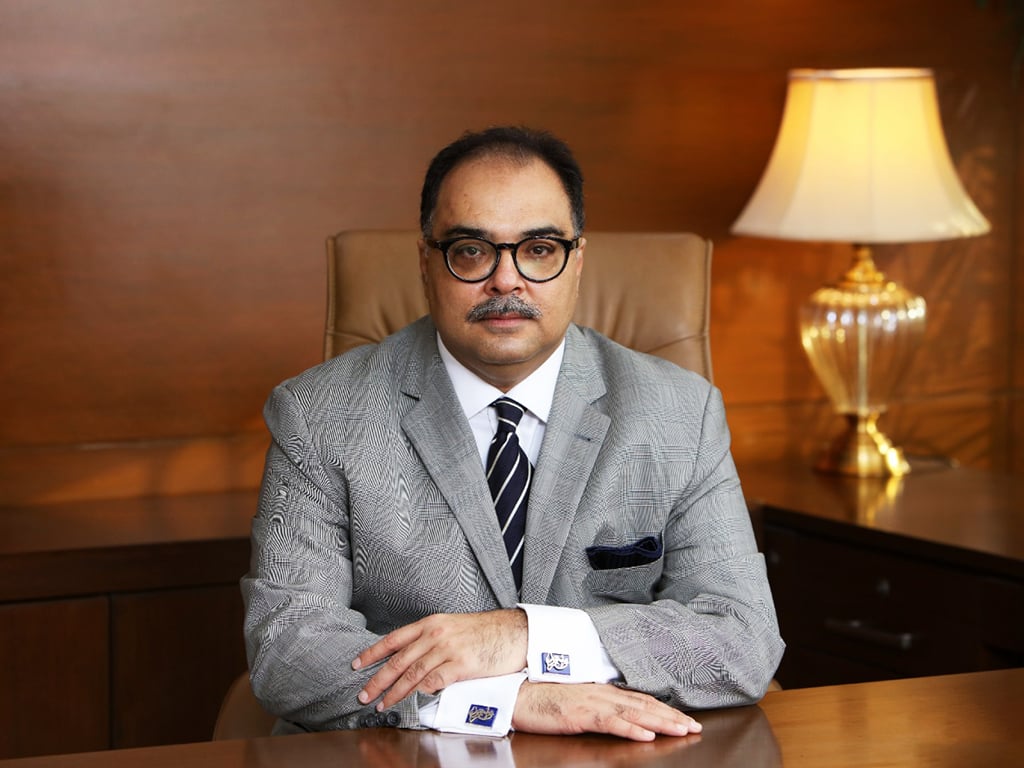
LAHORE, Dec 01 (APP):The Bank of Punjab (BoP) President and Pakistan Banks Association (PBS) Chairman Zafar Masud said on Monday that textile industry’s growth is possible through partnership with banks.
He stated this during his visit to All Pakistan Textile Mills Association (APTMA) while leading a delegation comprising Asad Zia, Head CCD, Raza Bashir, Chief of Staff & Strategy, Muhammad Babar Ayyaz, Head Commercial Banking Division & Agriculture, Naeem Javaid, Head Project Finance & Infra Advisory, Umer Khan, Group Head CIBG, Rizwan Hameed, Head CIBG and Syed Sayem Ali, Divisional Head Research.
Both sides discussed in detail textile sector’s performance, outlook of global textile exports, and the ways and means to upsurge the volume and value of Pakistan’s textile exports.
The BoP delegation was received by APTMA office-bearers including Kamran Arshad Chairman, Asad Shafi Chairman North, Siddique Javed Bhatti Vice Chairman, Haroon Elahi Shaikh, Muhammad Ali, Anjum Zafar, S.M Nabeel, Wasif Sikandar Butt, Amir Sheikh, Faisal Jawed, Danish Aslam, Ismail Fareed Sheikh, Danish Monnoo, Mansoor Allawala senior executives and the Secretary General Raza Baqir along with other leading exporters and members of the Association.
Zafar Masud gave a detailed presentation on economy, banking and textile sector and presented a roadmap for sustainable export growth. He said, volatile exchange rates, persistent core inflation and heavy fiscal borrowing continue to drive elevated interest rates and constrain long-term industrial credit.
Zafar added that while banks face criticism on access and pricing the sector has absorbed fiscal shocks, expanded financial inclusion and sustained exporters with structural liquidity and regulatory limits.
He said that reducing share of textiles in exports signals slowdown in moving up the value chain. Pakistan remains concentrated in mid-value products while global demands shift to technical, branded and high complexity fabrics.
Zafar continued that a strong textile sector requires a concerted effort by banks, textile industry and trade organizations to faster meaningful dialogues serving as a platform for critical thought. He said that banks are required to set up sharper, more responsive financing solution aligned with real industry needs and greater openness to new models, risk sharing tool and innovation in export and energy finance.
He proposed textile industry to set up clear documentation and transparency to unlock credit and foster the adoption of efficiency, energy and value addition upgrades that strengthen competitiveness. He urged for candid dialogue, course correction and joint problem solving. He said that it was required to put up a mechanism to translate conversation into action with measurable progress.
The BoP President suggested business community in general and textile exporters in particular to adopt immediate measures for compliance of all international conventions especially with reference to sustainability issues, labour and human rights.
Speaking on the occasion, Kamran Arshad Chairman APTMA gave an overview of Pakistan’s textile industry, major issues faced by the industry and way forward for enhancing coordination with the banks. He also presented 50 billion dollar textile export vision through setting up of 1000 garments plant with plug and play facilities in dedicated Apparel Parks. He sought assistance from banks for development of the proposed apparel parks which would not only boost exports but also generate employment opportunities for millions of workers directly and indirectly to help in poverty alleviation and uplift foreign exchange reserves.
Highlighting export potential of Pakistan, Kamran said that Pakistan has witnessed impressive growth in value added textile sectors. He added that more than 70 percent of Pakistan’s exports consisted of knitwear, garments, bed wear and towels. Value added exports have registered marvelous growth during the last decade especially after GSP Plus granted to Pakistan by the EU.
Asad Shafi, Chairman North, highlighted massive improvements achieved by textile industry of Pakistan and compliance of all UN conventions especially relating to labour and human rights, good governance, environment and emission control. He said that Pakistan has launched a National Compliance Centre which will work with business community to improve understanding of international compliance requirements and to promote a culture of equitable growth and discrimination free workplace.