ISLAMABAD, Dec 01 (APP): The ‘Pakistan Population Summit’ being held here aims to hold an urgent, coordinated national action to address Pakistan's escalating population, water, climate, and resource crises. The two-day national dialogue summit organised by DawnMedia in collaboration with the Population Council brought together politicians, economists, development specialists, private sector leaders, and experts to develop a shared vision as the rising population continues to place pressure on health systems, …
Sherry Rehman urges to address timely Pakistan’s escalating population, water, climate crises
ISLAMABAD, Dec 01 (APP): The ‘Pakistan Population Summit’ being held here aims to hold an urgent, coordinated national action to address Pakistan’s escalating population, water, climate, and resource crises.
The two-day national dialogue summit organised by DawnMedia in collaboration with the Population Council brought together politicians, economists, development specialists, private sector leaders, and experts to develop a shared vision as the rising population continues to place pressure on health systems, food and water security, and employment, said a press releases issued here on Monday.
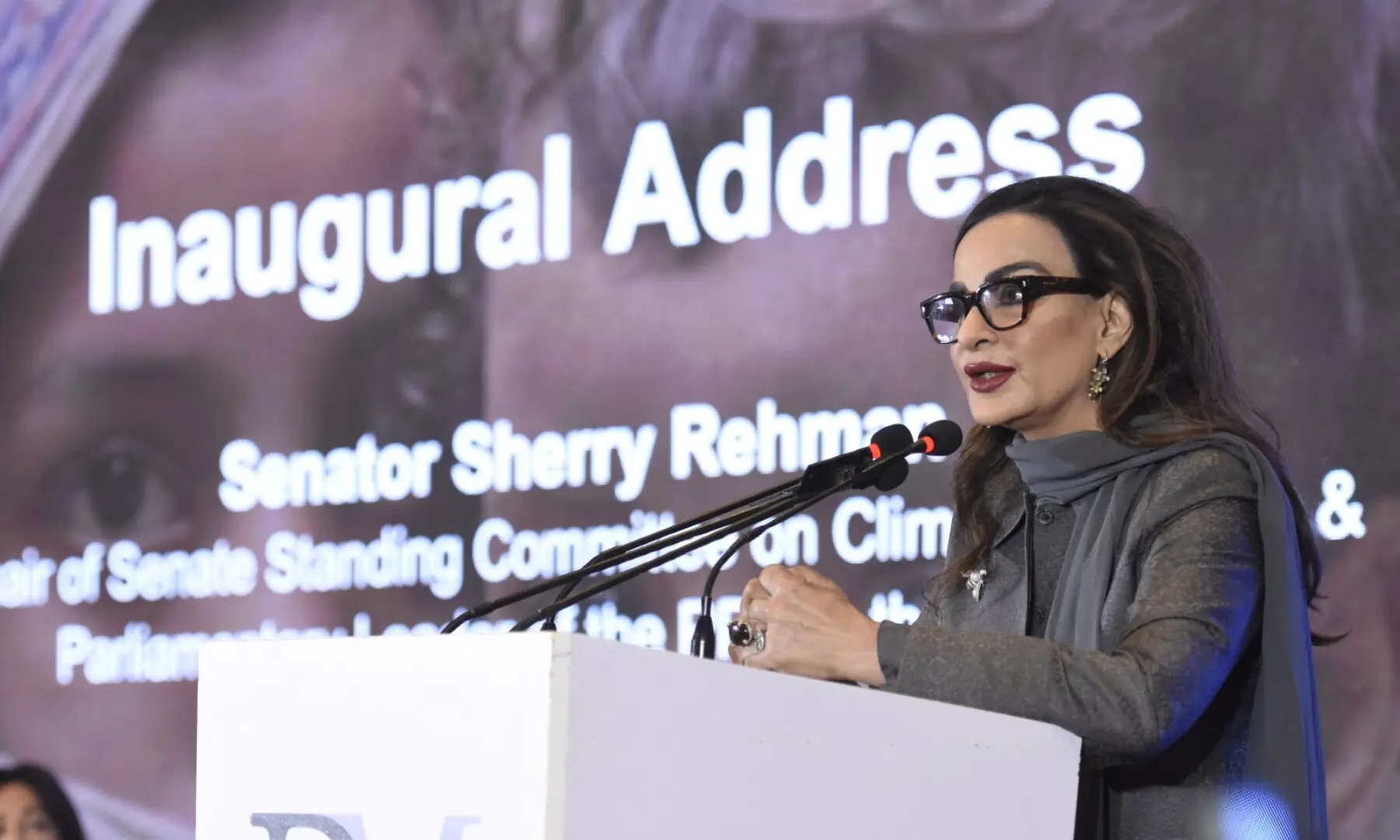
One of the key speaker Senator Sherry Rehman, the chairperson of the Parliamentary Forum on Population, in her opening address stated that “Population is a crisis of scarcity.”
She described the three ticking time bombs namely “Unchecked Population growth, Water scarcity and Climate stress” as they are no longer ticking rather they have noiselessly exploded all around us.
“Water is scarce in 2025, as predicted by UN; Climate is at its frontline heat as we are the most vulnerable globally; and population growth has passed the danger line. It’s at 6 million more people per year. Do we wonder why, then, our children go hungry? Or our health clinics can’t service the sick? Or why we have 26 million children out of school? Or where the 3 million jobs will per year come from ?”, she said.
Highlighting the acute water scarcity now defining 2025, Senator Rehman stressed “Our water consumption is way higher than resources and with this population growth rate we will need 60 MAF of water by 2050 to match basic needs as the population rises toward 315 million” she emphasized that “every drop is now competing with millions of new claimants every year.”
She stressed that Pakistan must urgently find its “pivot of balance,” noting “What are we thinking? Why are our children going hungry, out of school, and undernourished while our population growth outpaces our capacity to sustain it?”, she enquired.
Senator Rehman while underscoring an alarming demographic trends said that according to UNFPA, Pakistan’s population has reached 241.5 million, ranking fifth largest in the world. Annual growth rate: 2.55%, among the highest in Asia. 6 million people are added every year.
She warned that when population growth matches or outpaces GDP growth, every macroeconomic indicator deteriorates.
A 1% increase in population growth reduces per-capita income by Rs. 35,000 annually.
“If fertility is reduced to 2.1 births per woman by 2030,” she said, “ the per-capita income could rise by 37% and GDP growth to 3.9% by 2033.”
Senator Rehman stressed that population pressure is not neutral—it is a gendered public health crisis, borne overwhelmingly by women and girls.
She noted that every 50 minutes, a woman in Pakistan dies from pregnancy or childbirth complications, 82% of children have been deprived of a meal according to WFP and 40% of children under 5 face stunting (World Bank). Women face a massively disproportionate burden in water collection—72% of women, especially in rural areas, spend nearly nine hours a day fetching water.
“When women carry the burden of water, food insecurity, reproductive health, and inadequate services, the scarcity vector becomes a gendered crisis,” she said.
She stressed that unmet need for contraception—17.3% of couples—and a contraceptive prevalence rate of only 34% fuel population momentum not by choice, but by lack of access and agency.
Senator Rehman proposed to include integrating family planning into major social protection programmes that includes ensuring national coordination across ministries of health, education, women’s development, social welfare, water, and climate; scaling the Lady Health Worker (LHW) Program, launched by Shaheed Benazir Bhutto, which contributed significantly to reducing fertility from 6.2 in the 1980s to 4.8 by 2000; making contraceptives affordable and easily accessible, including eliminating taxes; engaging faith leaders to emphasize responsible parenting and birth spacing, echoing the Council of Islamic Ideology’s endorsement grounded in the principle of balance advocating for the proposed 10 billion population fund.
Senator Rehman concluded by thanking the DawnGroup for their support and for “helping sustain a conversation the country urgently needs.”
She added that “This issue demands national attention—not the burden of a single council or ministry. If we can feed our population, provide clean water, and give women agency, Pakistan can reclaim its future. I hope we continue to address this subject at the highest level”.