ISLAMABAD, Dec 1 (APP): Minister for Finance and Revenue Senator Muhammad Aurangzeb on Monday urged stakeholders to move beyond policy prescriptions and deliver an actionable roadmap to address population pressures, warning that unmanaged growth would continue to undermine Pakistan’s economic progress. “Whatever real GDP growth we achieve will be a dampener if we don’t manage the population and if we don’t control it,” he said while addressing a two-day Pakistan …
Aurangzeb calls for actionable population strategy, warns unmanaged growth to dampen economic gains
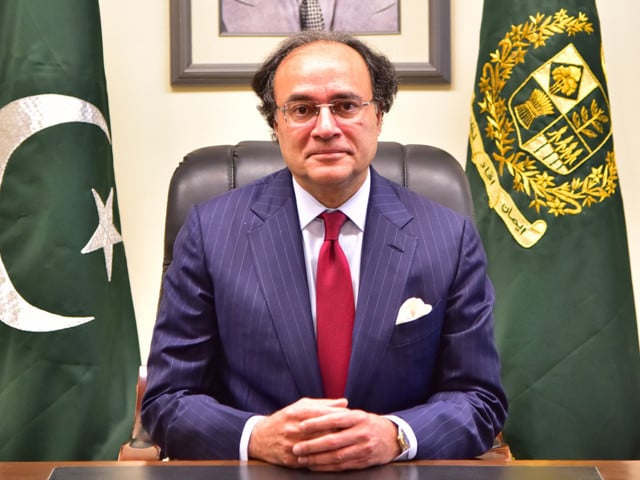
ISLAMABAD, Dec 1 (APP): Minister for Finance and Revenue Senator Muhammad Aurangzeb on Monday urged stakeholders to move beyond policy prescriptions and deliver an actionable roadmap to address population pressures, warning that unmanaged growth would continue to undermine Pakistan’s economic progress.
“Whatever real GDP growth we achieve will be a dampener if we don’t manage the population and if we don’t control it,” he said while addressing a two-day Pakistan Population Summit-2025, organized by the Dawn Media Group.
The minister said Pakistan had long understood the nature of its demographic and climate challenges but had struggled to implement solutions.“We have known ‘the what’ and ‘the why’ for the longest time. There is no dearth of policy prescriptions. Everything now has to do with implementation and execution – the how part of it.”
He said Pakistan’s two “existential issues” – climate change and population – must be confronted directly if the country aimed to unlock its long-term economic potential.
Citing a World Bank study projecting Pakistan as a $3 trillion economy by 2047, he stressed: “The roadmap was very clear – these two existential issues have to be recognized, and more importantly, negotiated, if we are to realize our full potential.”
Aurangzeb praised the Dawn Media Group for stimulating public debate on both themes through earlier initiatives. “Dawn Media Group led the entire discussion and public discourse on climate change under Breathe Pakistan, and now on population,” he said.
The minister stressed that the population debate had to be mainstreamed into national fiscal planning. “While Ministers of Climate Change, Health and Population Welfare lead sectorally, it is really the finance ministers who make it mainstream,” he noted. “If we are not making it part of our budgeting process and planning process, it remains an academic discussion.”
He welcomed the participation of religious scholars and stressed that family planning had no conflict with religion.
Recalling an earlier engagement, he said, “I was very encouraged when Mufti Usmani came with a fatwa explaining in detail that this has nothing to do with religion. We cannot shy away from action because of limitations that hold us back.”
The minister warned that both climate-induced shocks and unchecked population growth were already imposing heavy economic costs. “Flooding this year is going to shave off roughly 0.5 percent from our GDP growth forecast. And with respect to population, whatever real GDP growth we achieve will be a dampener if we don’t manage it,” he added.
Aurangzeb said the debate must take into account the demands of a new technology-driven economy, especially given Pakistan’s youth bulge. “With 64 percent of our population under the age of 30, this is not about governments giving jobs,” he stated. “We need to up-skill and re-skill freelancers, young IT professionals and those driving our digital economy.”
He said Pakistan’s rapid rise in global crypto participation highlighted the urgency for a regulated enabling framework. “We are now number three in terms of crypto participation,” he said, adding “That is why having the Virtual Asset Regulatory Authority is so important – so young Pakistanis can participate, but in a regulated way.”
The minister expressed concern over human capital deficits, particularly stunting and learning poverty. “Forty percent of Pakistani children under the age of five are stunted. This is intellectual poverty. This is our future workforce entering with a handicap we can ill afford,” he said.
He stressed the need to bring girls back to school, noting that women’s participation in the workforce consistently lifted growth across regional economies.
He said urbanization must also shape policy design, pointing out that nearly “88 percent of the population now lives in areas with urban characteristics,” making failures in sanitation, clean water and hygiene critical contributors to stunting. “If we want to address stunting, we must do it comprehensively—clean water, sanitation, spacing between childbirths, all of it comes together,” he said.
On financing, the minister said multilateral institutions were committed to supporting Pakistan’s demographic transition.
He cited the World Bank’s annual $2 billion support envelope – four of its six priority areas linked to climate and population – under the WB’s 10-year $20 billion country partnership framework. “But the ball is in our court to come up with investable and bankable projects,” he cautioned.
At the same time, he stressed that Pakistan must rely on its own resources before turning to donors. “For everything, we cannot run to international partners,” he said. “It’s not about ego or dignity. It’s about repurposing our own resources for what we truly require.”
Aurangzeb said the government would continue to build consensus with provinces, as it did during the signing of the National Fiscal Pact. “This is about self-reliance and self-funding,” he said.