
Pakistan to receive next generation Weather Alert System on Islamabad to Lahore Motorway
Pakistan to receive next generation Weather Alert System on Islamabad to Lahore Motorway
By: Ali Jabir Malik
ISLAMABAD, Nov 30 (APP): Pakistan is preparing to deploy one of its most advanced road weather alert systems on the Islamabad to Lahore Motorway through the ‘Weather on the Way’ initiative.
This flagship partnership between Weather Walay and ONE Network is the first of its kind in the region, offering hyperlocal weather intelligence on a major travel corridor that sees millions of passengers every year and spans multiple microclimate zones.
The system is designed to give travelers precise, real-time information so they can make safer and more informed decisions on the road.
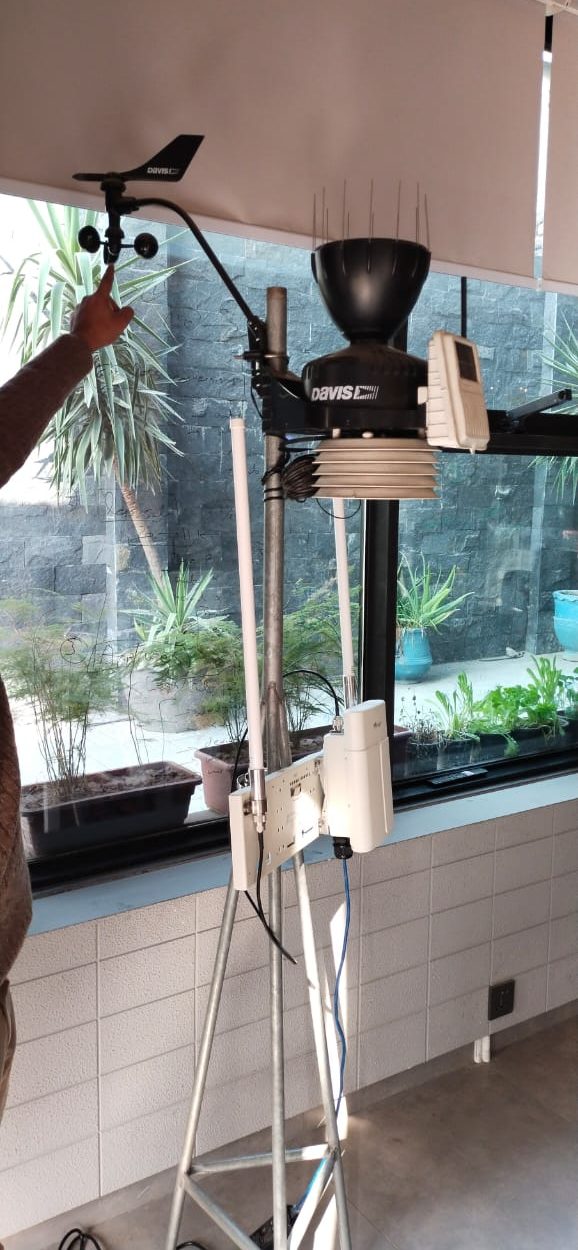
The technology network brings together 14 automated weather stations, 5 dedicated air quality sensors, 4 visibility sensors, satellite feeds, and weather forecasts. These inputs are processed through a decision support engine that tracks evolving hazards such as fog, rain, wind, and reduced visibility, along with other rapidly changing conditions that affect travel. Information is then delivered to travelers through smartphone applications, web platforms, and SMD display screens placed at toll plazas across the route.
The initiative marks a major leap in Pakistan’s road weather intelligence. For the first time, road operators, public agencies, and drivers will access the same real time meteorological data for route planning, hazard preparedness, and informed decision making. This approach mirrors international best practices where granular, ground verified observations are central to road safety and traffic management.
The broader value of installing dense weather and sensor networks extends far beyond motorway travel. These systems enhance microclimate mapping, agriculture planning, fog forecasting, logistics operations, tourism insights, energy modeling, and environmental monitoring. The data supports farmers in planning irrigation and sowing, improves the management of fog prone segments of the motorway, strengthens air quality tracking, and captures hyperlocal signals of dengue conducive environments, crop pests, plant diseases, and related risks. Built on locally developed software with select imported components, the system is tailored for Pakistan’s terrain and can support agencies such as the Motorway Police, NDMA, and other public sector organizations in planning and executing their operations with greater efficiency and confidence.
WeatherWalay’s work extends nationwide, where it continues to strengthen early warning systems and climate intelligence. Its modeling suite blends European, German, US, Swiss, and indigenous weather models that are configured for Pakistan’s complex terrain. The resulting datasets support a wide range of sectors including agriculture, tourism, energy, health, and transport, along with microclimate research, urban planning, environmental monitoring, and several other data-driven applications that rely on precise, localised weather intelligence.
The company’s microclimate mapping includes detailed work across Pakistan, with Islamabad serving as a clear illustration. Areas like Shah Allah Ditta, Bhara Kahu, and Banigala can differ by several hundred millimetres of annual rainfall despite being only a few kilometres apart. These contrasts drive different heating needs, energy use, and local weather patterns. Such insights underline the importance of dense ground-based sensor networks in cities and regions with diverse landscapes where no two localities behave the same.
WeatherWalay also works closely with universities and students, offering datasets, research support, and internship opportunities that promote local innovation in weather and climate technology.
With Weather on the Way, Pakistan is taking a decisive step toward safer roads, stronger early warning systems, and a modern climate intelligence infrastructure that benefits travellers, farmers, planners, and public safety agencies alike. It signals a future where weather is not just monitored but understood, anticipated, and used to protect lives across the country.
APP/ajb

